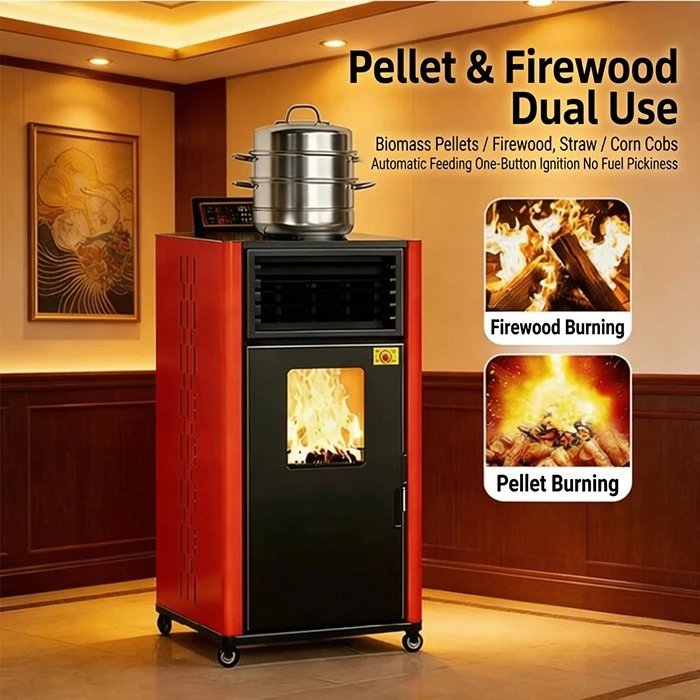
Which is better, a wood-burning real fire fireplace or a pellet fireplace?
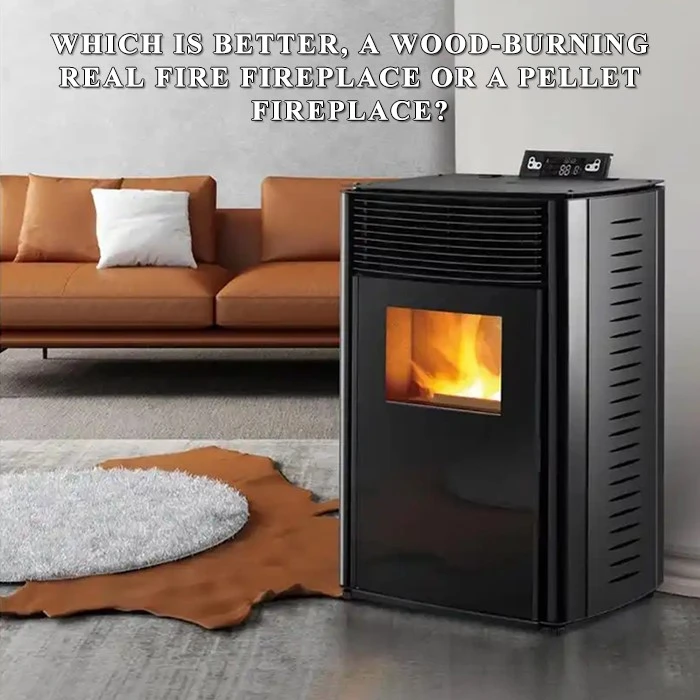
The main differences between a wood-burning fireplace and a pellet-fueled fireplace lie in the fuel type, degree of automation, thermal efficiency, and maintenance frequency: The former burns logs manually and has lower thermal efficiency but a strong atmosphere; the latter burns compressed pellets and can automatically feed the fire, has higher thermal efficiency (often over 80%), but requires electricity and relies on the pellet supply chain.
Fuel Source: The wood-burning fireplace uses dry logs (hardwood is preferred, with a moisture content of less than 20%); the pellet fireplace uses compressed biomass pellets made from sawdust (standardized industrial products).
Operation Method: For the wood-burning fireplace, it requires manual ignition, regular addition of firewood, and manual adjustment of the air vent; the pellet fireplace has the functions of automatic material feeding, one-button start/stop, and temperature control adjustment (it must be connected to the power supply).
Heat Efficiency: The wood-burning fireplace typically has an efficiency of 50%-70% (lower for open type); the pellet fireplace has an efficiency of over 80%-90% due to precise combustion control.
Maintenance and Cleaning: The wood-burning ashes are abundant and require frequent cleaning; the flue is prone to accumulate varnish oil (it is recommended to have professional cleaning 1-2 times a year); the pellet burning is thorough with very little ash, and the daily cleaning burden is light.
Installation Requirements: Both require an exhaust pipe; the pellet fireplace additionally needs to be close to the power socket to drive the motor and control system.
Usage Cost: The cost of wood-burning depends on the difficulty of obtaining the wood (cutting yourself is free or can be purchased); the pellets need to be continuously purchased in bagged fuel, and the price fluctuates according to regional supply.
What kind of houses are suitable for wood-burning fireplaces and pellet real-fire fireplaces?

Wood-burning fireplace: Suitable for intense heating and creating a cozy atmosphere
House type: Suitable for villas, self-built houses or large-sized houses with independent chimneys. Due to the need for smoke discharge, a good chimney structure is necessary.
Space requirements: The heating area range is wide (30-200 square meters), but it is mainly targeted at open spaces without partitions. If installed in the living room, it only needs to match the size of the living room.
User profile: Suitable for users who enjoy the visual appeal of the original flames, are not bothered by the need to manually add firewood and clean the ashes, and pursue the ultimate radiant heat experience. It is not limited by water and electricity supply and can still serve as a reliable heat source even during power outages.
Maintenance cost: Regular cleaning of carbon deposits in the chimney is required, and the maintenance frequency is high. The service life is approximately 20-25 years.
Particle Real Fire Fireplace: Ideal for modern convenient heating
House type: Suitable for apartments, duplexes or modern residences that cannot have the flue modified. Some new products have lower requirements for installation conditions and may even not require any damage to the house structure.
Space requirements: Achieves uniform heating, improves air quality through convection and radiation, particularly suitable for cold and damp environments in winter. The power selection should be matched with the space. For example, 42,000 Btu can heat approximately 1,300 square feet (about 120 square meters).
User profile: Suitable for users who prefer fully automated operation, desire constant temperature control, and do not want constant supervision. It is cleaner and more environmentally friendly, with less emissions and less ash production.
Maintenance cost: High level of intelligence, automatic ignition and temperature control, relatively simple maintenance, with a lifespan of approximately 15-20 years.
Regarding the suggestions for choosing a fireplace, what advice could Kewei give you?
Check the installation conditions: If there is an existing flue and you prefer a traditional feel, choose a wood-burning fireplace; if there is no flue or you prefer not to go through the hassle, choose a pellet or gas/alcohol fireplace.
Check the safety distance: For wood-burning fireplaces, a minimum safety distance of at least 6 meters from flammable materials is required. For gas fireplaces, the distance is approximately 1.8 to 3 meters. During installation, strict adherence to the specifications must be followed.
Floor protection: A real fire fireplace must not be placed directly on laminate flooring. A heat insulation layer (such as a stone countertop) must be installed to prevent the floor from deforming or catching fire.
How about the Kewei fireplace that can be used for both wood burning and pellet burning?
Advantages: Flexible fuel selection (wood can be replaced with pellets when available), the wood-burning mode provides a realistic fire atmosphere, the pellet mode supports automatic ignition/feeding/constant temperature control, the thermal efficiency is usually higher than that of traditional wood-burning stoves (up to 80%+ in the pellet mode).
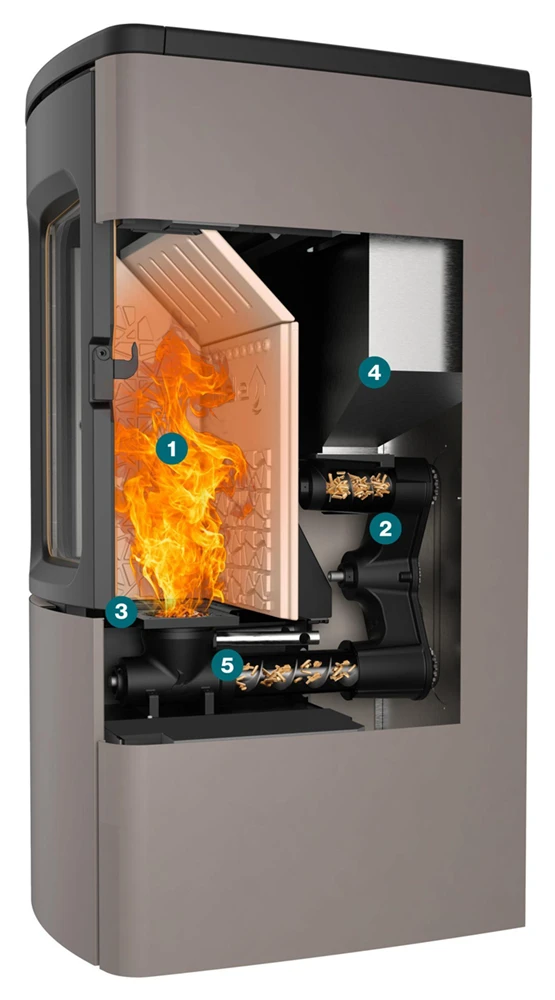
Disadvantages: The mechanical structure is complex (including hopper, spiral feeder, and electronic control board), the failure rate is higher than that of single-fuel stoves; the price is usually 20%-40% higher than that of stoves of the same grade; two types of fuels need to be stored simultaneously and different ashes need to be cleaned regularly; the pellet mode can only be used with electricity (manual wood-burning is possible only in case of power outage).
Applicable scenarios: Areas with unstable wood resources, those who prefer automation but do not want the real fire sensation, households that need frequent heating in winter and have convenient access to pellets in the local area.